
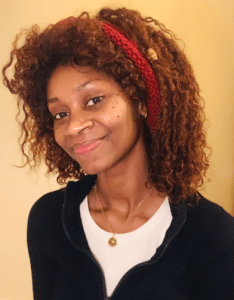
Maria Luisa Ndong Asue
Department, Institution: Sociology/Psychosocial Studies, Birkbeck
UBEL Pathway: Race and Racialisation
Supervisor: Dr Margarita Aragon and Dr Hilary Sapire
Contact details: mndong01@student.bbk.ac.uk
About Me
I hold a BSc in Psychology with Neuroscience and completed my first MSc in Cognitive Neuroscience and Clinical Neuropsychology at the University of Padova, Italy, with a research internship at the Society, Youth and Neuroscience Connected Lab at Erasmus University Rotterdam. I am completing my second MA in Sociology at Birkbeck University, where I take an interdisciplinary approach to understanding Black lives and liminal existences through Black and Indigenous methodologies and epistemologies. My academic journey has been complemented by roles as a neuropsychology research assistant in longitudinal ageing studies, a research assistant on the AccessHE Project examining the BAME Attainment Gap in London, and as an assistant educational psychologist in a sixth form school at South London. Beyond academia, I quietly inhabit the poetry of life, secretly aspiring to write it, while listening to the vibrations and frequencies that photographs hold in their silence.
My Research
(working title): Rewriting Silence: The Colonial Afterlives and Racialised Futures of Afro-Descendant Youth in Spain.
My research critically investigates how Spain’s colonial legacy with Equatorial Guinea continues to shape the lived experiences of Black Afro-descendant youth today. Building on Trouillot’s concept of the “silencing of the past,” my research examines how colonial histories are not merely neglected but actively reconfigured to sustain racialised hierarchies in contemporary Spain. Through archival research of Spanish media and government documents from Equatorial Guinea’s late colonial and early post-independence periods (1967-1978) and ethnographic fieldwork with Black Afro-descendant youth in Spain, I explore how colonial amnesia persists while investigating the grassroots movements, artistic expressions, and everyday resistance strategies through which these communities challenge dominant narratives and reimagine belonging. Drawing on decolonial theory, Black feminist and Indigenous methodologies, critical race theory, and affect studies, this research asks what gets recorded as a source, what gets preserved in archives, what gets chosen for narratives, and what gets remembered as “History.”
Impact of My Research
My research aims to bring into the surface the stories that continue to forcefully live in the liminal, creating space where the unthinkable—Black lives, marginalised lives—can become thinkable within Spain’s socio-political and cultural contexts. Beyond its academic contributions to Black Europe studies and decolonial scholarship, this project seeks to create a collective archival of voices from the margins as recorded sources that can be remembered—a Black futurity archive with voices that sing from the periphery and make our stories present. Through creative means such as photography and poetry, and by fostering reciprocal engagement with grassroots organisations like CNAAE, I aim to develop actionable recommendations for policymakers while advancing more nuanced understandings of anti-Black racism and resistance beyond US-UK-centric narratives. Historical “facts” aren’t neutral; they’re selected and interpreted through existing power structures. My research challenges these silences, offering new epistemologies that centre the lived experiences and creative resistance of those still positioned as Europe’s contemporary Others.