
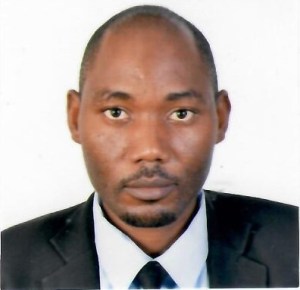
Gilbert Habaasa
Department, Institution: Population Health, LSHTM
UBEL Pathway: Population and Health
Supervisor: Dr. José Manuel Aburto and Dr. Julio Romero Prieto
Contact details: Gilbert.Habaasa@lshtm.ac.uk
Social Media: https://www.linkedin.com/in/gilbert-habaasa-0825aa6a/
About Me
Am pursuing MPhil/PhD – Epidemiology & Population Health (Research Degree) under ESRC UBEL DTP 1+3.5 Studentship award. I hold Master of Science in Population Studies from Makerere University in Uganda. Am a senior researcher at Population and Development Consult Limited based in Kampala, Uganda. Am also the IUSSP-CRVS Fellow (2019-2022). Previously, I served as a CRVS National Consultant for Uganda, Research Fellow at African Centre for Statistics of United Nations Economic Commission for Africa (Addis Ababa) and Technical Assistant at the Statistics Division of African Union Commission (Addis Ababa).
In my free time, I like reading novels and travelling.
My Research
Limited studies on sex disparities in mortality and lifespan inequality have been carried out in Sub-Saharan Africa. This is largely due to undeveloped health and civil registration systems, unlike the developed countries such as the UK where mortality data is readily available. The Human Mortality Database contains information for developed countries only and hence Sub-Saharan Africa data is not posted there.
Although previous studies reviewed for Western countries predict an increase in male mortality than females, others predict a slight reduction in male excess mortality. However, the estimates of the future mortality estimates may be the contrary. The situation is even unknown in Sub-Saharan Africa due to hardly any studies conducted on age and sex-specific mortality. The modelling of mortality trends and understanding of Sub-Saharan Africa has been largely based on the Western constructed life tables. To understand the mortality situation and the lifespan inequalities in Sub-Saharan Africa, a clear understanding of the main drivers of sex disparities in mortality is necessary. This will be key in determining whether the male excess mortality gap is wide or even narrow for specific African countries. The mortality causes by sex will project future trends for sub-Saharan Africa in comparison to the United Kingdom.
The study adopts a longitudinal study design using a retrospective approach to follow up particular individuals of a population over a long period usually decades. The study will focus on 5 countries in Sub-Saharan Africa (South Africa, Ghana, Cameroon, Ethiopia and Uganda) in comparison to the UK longitudinal data. The Sex disparities in mortality will be examined for the following indicators: life expectancy at birth; Infant mortality rate; under-five mortality rate; Age and sex-specific death rate; crude death rate; and leading cause of death by sex. The measures of length of life shall include life expectancy; adult life expectancy; exceptional age; and exceptional age for adults. The measurement of lifespan equality shall include life expectancy as a proportion of exceptional age; proportion surviving to maturity; lifetable entropy; gini coefficient; and coefficient of variation.
Impact of My Research
Sub-Saharan Africa faces a challenge of undeveloped health systems. Due to undeveloped civil registration systems, death registration and cause of death data is inadequate and rarely used for policy decision making. Hence, my PhD research explores alternative sources of data and data analysis approaches to understand the sex disparities in mortality and lifespan inequality for Sub-Saharan Africa. This will generate new knowledge and help policy makers in Sub-Saharan Africa and other parts of the world to direct their interventions and resources in improving the health status of their population.