
Md Rafiqul Islam, ESRC-funded Ph.D. candidate
Natural Resources Institute (NRI), University of Greenwich
…Suddenly I was in Dhaka, city of Mosques, city of buildings growing – latching onto each other like wild mushrooms, city of dust, heat, traffic, tea, rain, and impossible movement. My city of oxymoronic beauty.
My research is about striking a balance between conservation of the resource – Hilsa, national fish of Bangladesh – and positively influencing the livelihoods of the people who depend on it – Hilsa fishers, in this case. Last year, I went to Bangladesh for fieldwork, with the intention of collecting qualitative data. It is difficult to write about the experience without putting in figures and tables, or without slowly turning this into a qualitative report. Still, I’ll try to write not about the data, not specifically about the research per se, but about my personal experience as a researcher.
For me, PhD journey up to that point had mostly involved meetings, sitting in front of the screen eight hours a day, and then a few meetings more. Yes, sounds bland, but in truth it was exciting learning something new every day, and days were whooshing past. Then it was somehow time to collect primary data from the six Hilsa sanctuaries in Bangladesh.
I was very fortunate to have UBEL DTP fund my fieldwork trip and provide vouchers for my research participants as well. The whole process of application, verification, and result for the funding was very straightforward, and quick. Once all the paperwork and ethics meetings were done, it was finally time to go around towns, islands, quiet villages and sleepy offices, bustling bazaars and cozy tea-stalls in south-central Bangladesh – and talk to the stakeholders of my research.
I landed in Dhaka, the capital.
I had a few of my stakeholders join me there in the city for the first few days. I conducted key informant interviews, some in person, some over the phone, and went through my plans for traveling into the sanctuaries with informants from that area. Although I am from Dhaka, I had never actually been to the sanctuaries myself. So I sought help, and it was provided.
Transportation varied according to the location. You go from Dhaka to any district city, buses are aplenty, trains are also somewhat easy to book. The journey from the district city to any smaller town, however, can be tricky. Sometimes there are local buses, sometimes all you have are two-seater CNG vehicles (Tuk-Tuks); or the riskier but more flexible option – the backseat of a motorbike. Half of the time, none of these would be available; especially when you get near riverine islands and landing sites. Then you have to depend on boats of various size and power, from motorized boats to hand-paddled ones.
I had previously talked to local government employees – in most areas, this meant the UFO (Upazilla Fisheries Officer) in charge – who became my first point of contact going in. I would visit them in their offices. I’m happy to say that all the government officers and their respective office stuff were really friendly and forthcoming. We would settle in, get some interviewing done. Then I would start going into the Hilsa fisher-heavy areas. There, I would speak to other stakeholders: fishers, local political actors, NGO partners, value chain participants, law enforcers, and community leaders, and conduct focus group discussions and key informant interviews.
At first, I was accompanied by field assistants provided helpfully by the UFOs, they helped in making introductions to the fishers and with navigation as well. But as I gradually started to see that people were more comfortable speaking to me alone, I requested the assistants to let me conduct the procedure by myself; and they were happy to do so. As a result, conversations with stakeholders may have become a bit more awkward at first, and slower too, but I like to think that they became more honest.
The formal methods I had counted on for collecting my data were focus group discussions, key informant interviews, and participatory activities such as transect walks and workshops. But in practice, fieldwork also took place in the spaces in between: while waiting for a boat, sitting in a tea stall, walking through a landing site, or watching fish being auctioned.

One of my strongest memories is from talking to Hilsa Aratdars (warehouse owners and loan providers) in the midst of the auctions going on. Hilsa Fishers would dock their boats nearby; carry their catch in their hands for the day, and plop it all down inside the aratdar’s warehouse. After taking his cut, the aratdar would put the Hilsa on auction. Around him stood middlemen, helpers, buyers, observers. In that moment, the value chain of Hilsa was not an abstract concept anymore, it was all manifesting right in front of me.
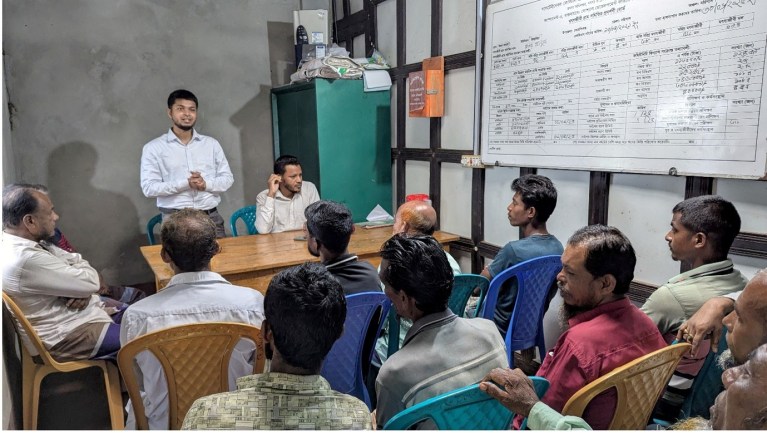
Some of the focus group discussions were held in offices of local politicians, some in houses of community leaders; some in common communal spaces in the villages, and one memorable one took place in a primary school that had been recently abandoned because there were not enough students left to teach anymore. I had pages and pages of curated questions that I needed to ask. But natural conversation, I found, is a thing alive and breathing. You have to step back and let the stakeholders speak, or you risk turning the conversation into an impromptu interrogation.

Our discussions often began with Hilsa, but rarely stayed only with Hilsa. People spoke about declining catches over the years, changing river conditions, the impact of fishing bans in their lives, compensation, debt, enforcement, corruption in governance, fishers leaving the industry, and of course, the uncertainty of their future. To the fishers, policy, ecology, and livelihood were not the neatly separated, underlined sections as they were in my pages. No. It all melded together, were parts of the same daily struggle for them.
The transect walks we went on together were especially interesting. You walk with participants along a beautiful, vibrant, verdant landscape – snaking rivers, green fields, scattered houses – and you see them point to some feature of the landscape, and tell you the story behind it.
‘This, here was a stretch of river that was miles west fifty years ago.’
‘That bend of the river, fifteen years ago used to flash silver with Hilsa scales. Your nets would be so heavy with brood Hilsa that it’d take five men to pick up a single jaali net.’
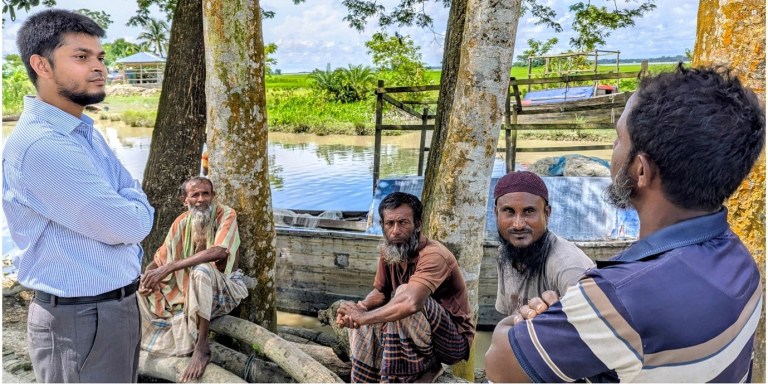
Travel to char (island) communities added another layer to the experience. There, boats were social spaces, where a miniature society formed at the beginning of the journey: women travelled with children, plastic bags filled with household goods; men with cattle, feed, a single umbrella; and everyone seemed to know everyone. Then, once you reach your destination to the other side of the river, that small society dissolved unto itself.
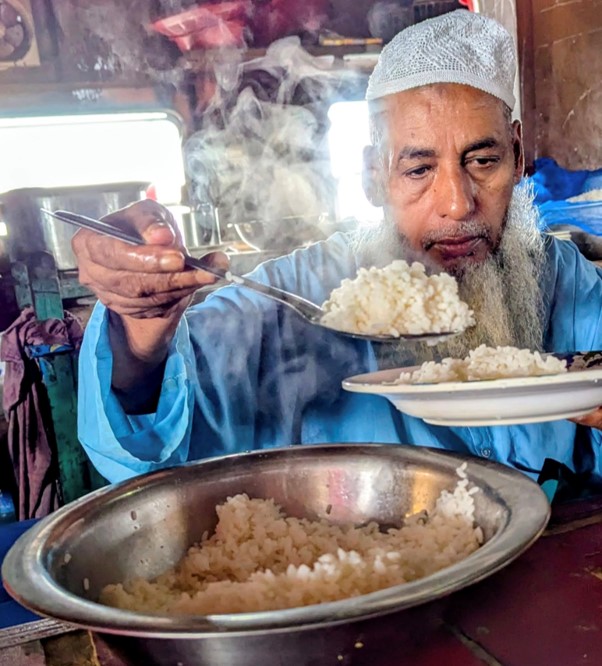
Communities there have so little to speak for. Their lunch tomorrow may depend on whether they caught enough fish today. And yet, I could not leave a house once I went in without eating something with them – biscuits, rice and lentil, bananas – whatever they could afford. Women managed households for long stretches when the men were gone for weeks, months even. Sometimes the men had run away after falling into debt, and the women of the house had to face the NGOs, the angry aratdars, and convince them to wait for yet another month. Children grew up near uncertain waters, and families adapted to rules and rivers that both keep changing.

I also organised a participatory workshop, which felt different from the interviews and FGDs. After days of moving through riverbanks, landing sites, offices, boats, and tea stalls, the workshop brought some of those scattered conversations back into a shared room. Stakeholders listened, disagreed, clarified, corrected my assumptions. To me, it felt like a reminder that knowledge of the Hilsa system does not sit in one place. It is distributed across fishers, officers, market actors, researchers, and local leaders; and part of my job, as a researcher, was to create a space where those pieces could speak to each other.
Looking back now, I feel some of the most striking scenes from my fieldwork were not dramatic at all. They were more like a quiet pause in reality, like a fly frozen forever in amber. A fisherman eating rice in a hurry before returning to the river. A passenger sitting quietly with an umbrella on a boat. A small shop selling bread, bananas, snacks, and tea. A group of fishers laughing during a conversation. These ordinary moments helped me see the field not only as a research site, but as an inherently complete and lived world.
At times, the fieldwork could be physically tiring. I was moving across miles and miles of terrain in a single day. Transport was uncertain; you bear the forty-degree-celsius heat, the incessant rain, you wait around people, you repeat explanations of the research like a mantra, and of course, you are constantly recording, listening, processing information through it all. But the difficulty of the research was also what made the research meaningful, and I do not evoke the m-word lightly.
Before going, I had thought of the Hilsa social-ecological system through tiers, categories: resource system, resource units, users, governance, interactions, outcomes. In the field, those categories sprouted meaning, like wings of an angel. ‘Governance’ became an fisheries officer explaining the limits of enforcement from his perspective, and how helpless he felt. ‘Livelihood’ became a fisher describing how he went into one debt to repay another.
‘Ecological change’ became a riverbank that was once someone’s home. ‘Trade-off’ became the uneasy space between protecting Hilsa and protecting the people who depend on Hilsa.
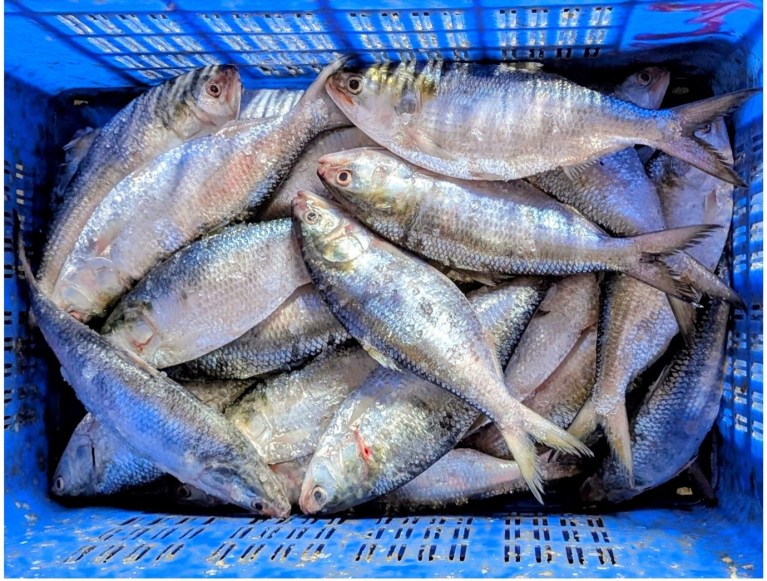
I returned to London with recordings, notes, photographs, and transcripts. But more importantly, I returned with a more, shall I say, holistic sense of what it means to study a system. A social-ecological system is not just a framework. It is a set of relationships, pressures, histories, and hopes. It is also a ferry ride, a tea stall, a landing centre, a government office, a schoolroom full of fishers, and a basket of silver Hilsa glinting under artificial light.
Fieldwork reminded me that research is not only about collecting data. It is also about learning how to listen.